
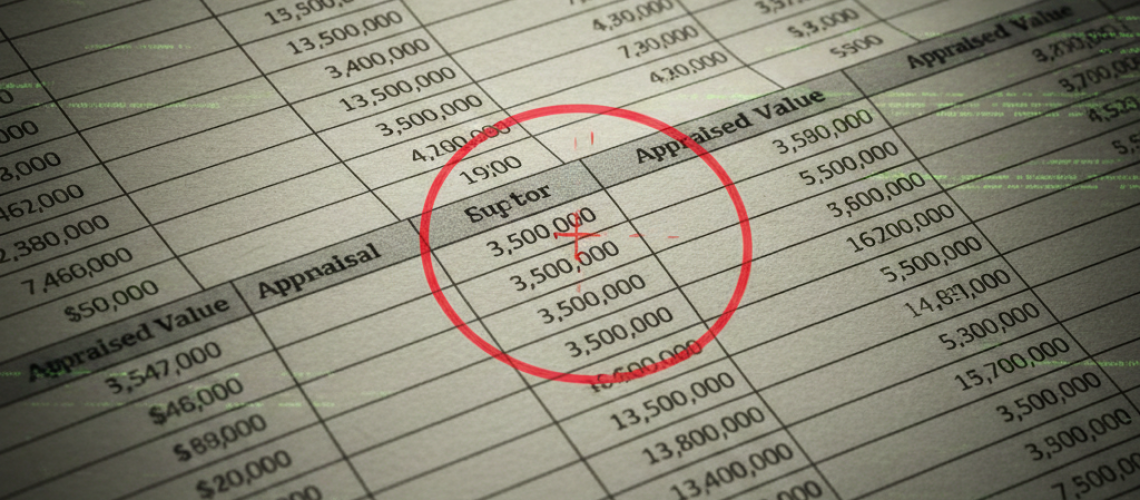

Quick Answer: A $950,000 home appraised at $925,000 on a VA loan — a $25,000 gap that would have killed the deal. AI analysis of the appraiser's own report found three errors: his comparable sales averaged $972,000 (contradicting his conclusion), one comp was in the wrong school district with no adjustment, and the home's modern upgrades received no value credit. A formal challenge reversed the appraisal to the full contract price. The evidence was inside the report the entire time.
Real estate transactions look effortless from the outside — polished photos, an open house, a handshake at closing. But the deals that actually close often survive because of work that happens entirely behind the scenes. This is a story about one of those moments — when a single document nearly cost a seller $25,000 and a buyer their dream home, and the only thing that saved it was treating an official appraisal not as gospel but as a hypothesis that needed to be tested.
We walked through the full case in a recent discussion — the Tidewater phone call, the three errors buried in the data grid, the formal challenge process, and the ten-day wait for the VA's decision. Listen or read the full transcript here.
The Setup: A Unicorn Property and the Strictest Appraisal Process
The property was a historic home on substantial acreage — old-world character with stone walls and charm — but the seller had invested heavily in modernizing the systems. High-end energy efficiency, everything upgraded. Think of a classic Mustang with a Tesla engine under the hood. Beautiful for a homeowner. A nightmare for an appraiser, because there's nothing to compare it to. Historic homes don't have the modern systems. New construction doesn't have the charm or the acreage. The house sits in a valuation blind spot.
It went under contract for $950,000 with a buyer using a VA loan. The VA loan is the gold standard for veterans — zero down payment, excellent rates, a benefit they've earned. But the VA is fiercely protective. They assign their own appraiser. You don't pick them. And their word is essentially law — if the number comes in low, the bank simply won't lend more than the appraised value.
When the Appraisal Comes in Low, the Loan Type Decides Your Options
The appraisal came in at $925,000 — a $25,000 gap. On a conventional loan, this is usually solvable: the buyer covers part of the gap in cash, the seller reduces the price, they meet somewhere in the middle. But with a VA loan, the zero-down benefit means the buyer typically has no cash reserves to cover a gap. If they had $50,000 in the bank, they'd probably be using a conventional loan. And the seller had a signed contract for $950,000 — why should they eat $25,000 because one person's math was different?
In most cases like this, the deal simply dies. The buyer walks away. The seller relists with a stigma — "low appraisal" signals "overpriced" to every future buyer, and the offers come in lower. It's a lose-lose.
The AI Audit: Three Errors Hiding in Plain Sight
Instead of negotiating or giving up, the team uploaded the dense appraisal PDF into an AI tool and asked it to do something most people never think to do: check the appraiser's own math.
The AI found three distinct errors that together accounted for the entire $25,000 gap. First, a math contradiction — the appraiser's own comparable sales averaged $972,000, but his conclusion was $925,000. His data supported a value higher than the contract price, but his conclusion went in the opposite direction. Second, a school district error — one comparable was in a different, lower-value district with no location adjustment. In Pennsylvania's Chester and Delaware counties, school district lines move property values by tens of thousands of dollars. Treating two different districts as equivalent is a false comparison that suppresses the value. Third, the home's modern energy-efficient upgrades received no contributory value credit, as if the seller's investment in modernization didn't exist.
The evidence to overturn the appraisal was inside the appraisal itself. It just needed someone who knew to check the work.
The Challenge Process Most People Don't Know Exists
Since the 2008 crash and the Dodd-Frank Act, calling an appraiser to complain is essentially illegal. The formal path is a Reconsideration of Value — a written document that has to read like a legal brief, not a sales pitch. AI drafted the rebuttal using the appraiser's own data flaws and VA guidelines, structured in the appraiser's analytical language rather than a salesperson's voice. It went up the chain of command — lender review, then the appraiser, with the possibility of escalation to the VA Regional Loan Center for federal review.
After ten days of silence, the VA reversed the appraisal to the full $950,000 contract price. Not a compromise. A complete correction. The buyer kept their zero-down benefit. The seller kept their equity. The value was there all along.
What This Means for Buyers and Sellers
A low appraisal isn't a final verdict — it's one person's analysis, and people make mistakes. They pick the wrong school district from a drop-down menu. They miss the fact that their own numbers don't add up. They ignore upgrades because the contributory value is hard to quantify. These are human errors in a complex system, and they translate into five-figure financial consequences.
The skill that saved this deal isn't staging or marketing — it's forensic data analysis. Knowing what the Tidewater Initiative means. Understanding the ROV process. Being able to read a dense appraisal grid, find the inconsistencies, and draft a formal challenge that can survive federal scrutiny. That convergence of experience and technology is the difference between a deal that dies and one that closes at full value.
If you hire an agent who only knows how to bake cookies and smile, this deal dies. Period.
Listen to the Full Case Study
This post covers the highlights. The full discussion walks through every detail — the VA loan mechanics that make a low appraisal uniquely dangerous, the Tidewater Initiative phone call that signals trouble before the report is even finished, how AI extracted and cross-referenced data from the appraisal grid, the Dodd-Frank firewalls that make the challenge process a legal minefield, the chain of command the ROV travels through, and the client's perspective during ten days of silence. Listen or read the full transcript here.
For weekly market data across 41 school districts, visit our Market Intelligence Tool.
Have an Appraisal Issue or a Complicated Transaction?
Low appraisals, VA loan complications, properties that don't fit neatly into the comp grid — these are the situations where the right expertise changes the financial outcome by tens of thousands of dollars. If you're dealing with a deal at risk or need someone who knows how to fight for the number, we've been here before.
We'll personally respond within a few hours. No autoresponders, no sales team — just us.
Or call (484) 259-7910